The manual gearbox is no longer the fast choice, and buyers want it anyway. Here are the cars still offering one — and what each asks of you.
The manual gearbox is no longer the default, and it has not been for a long time. Dual-clutch transmissions shift faster, launch harder, and post better numbers on every metric a spec sheet measures. None of that is in dispute. What is also true is that a meaningful number of drivers want the third pedal anyway, and that the cars still offering one have become a category of their own — bought deliberately, held longer, and increasingly hard to replace.
This guide covers the sports cars in our database that still offer a manual, what each one asks of you, and where the trade-offs actually land.
The affordable end
The purest arguments for a manual are made by the cheapest cars, because they have the least power to hide behind. The Mazda MX-5 Miata (ND) is the archetype: a front mid-engine, rear-wheel-drive roadster with a Skyactiv-G 1.5-litre or 2.0-litre inline-four and a six-speed manual.[1] The 2.0-litre car makes 181 hp after the 2019 update — a figure that sounds modest and matters less than it looks, because the car was engineered around it. Read the full history on the MX-5 database page, or browse live MX-5 listings.
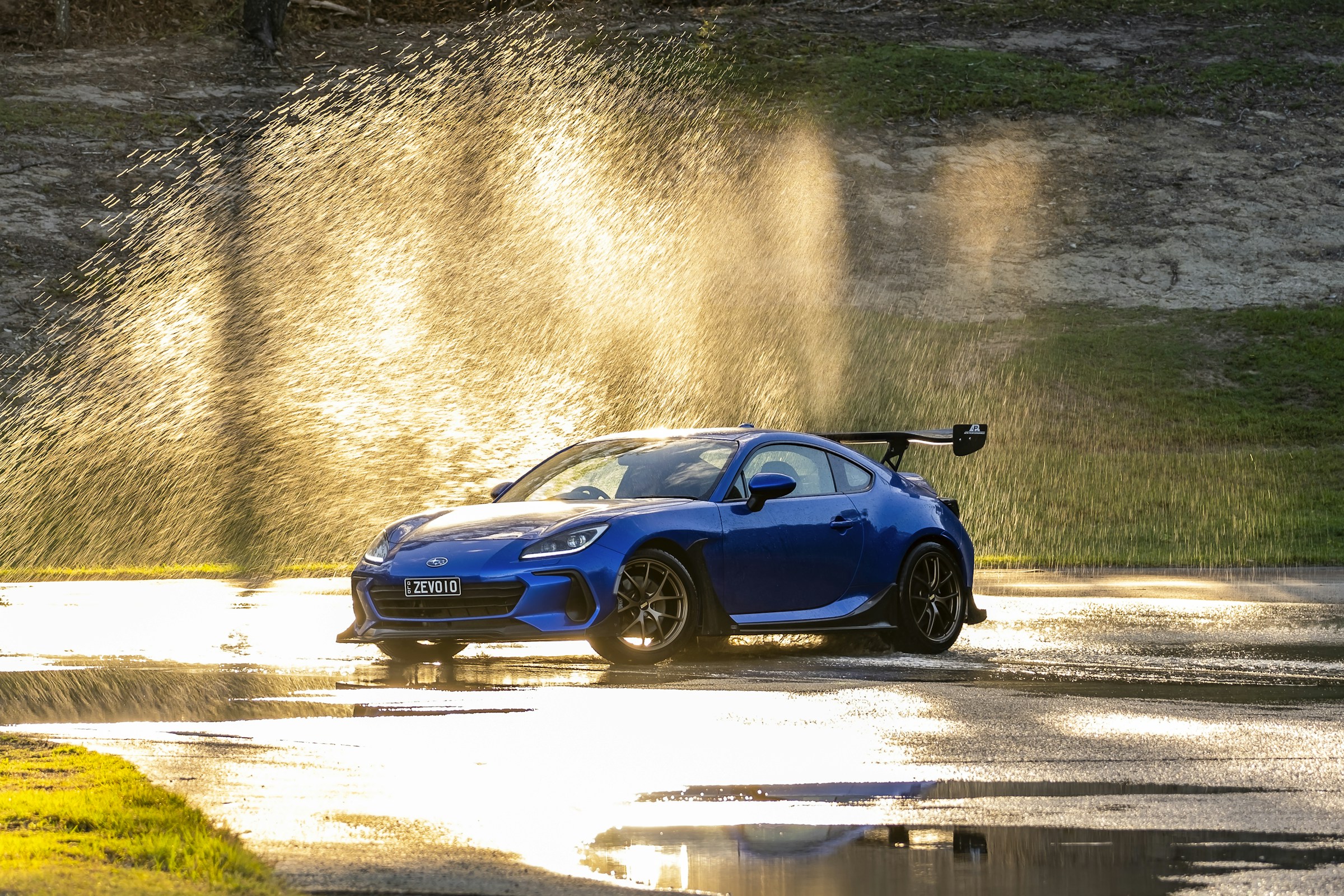
The Toyota GR86 and Subaru BRZ are the same idea with a roof and a bigger engine. Both use a 2.4-litre naturally aspirated flat-four making 228–232 hp with 184 lb-ft of torque, and both reach 60 mph in about 5.4 seconds.[2] A six-speed manual is standard and a six-speed automatic is optional. If you want the shared platform’s two faces, compare the GR86 record against the BRZ record, then check GR86 inventory or BRZ inventory.
The modern classic
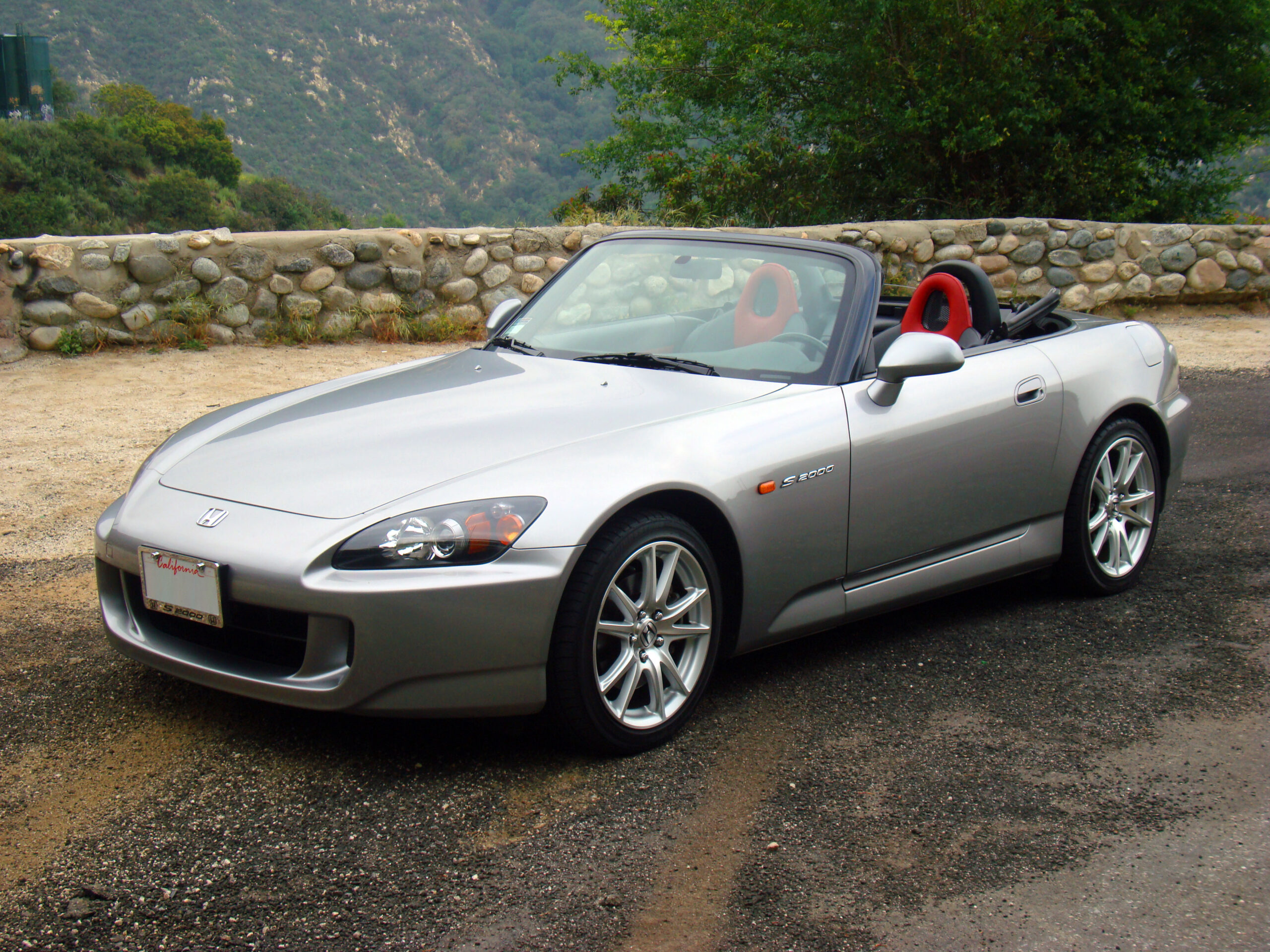
The Honda S2000 (1999–2009) is the car most often cited when people argue the manual is worth preserving. A 2.0-litre F20C or 2.2-litre F22C1 DOHC VTEC inline-four producing 237–250 hp depending on market, a front mid-engine rear-drive layout, and a six-speed manual as the only transmission ever fitted.[3] There was no automatic option — the car was built around the gearbox rather than the other way round. Values reflect that. See the S2000 database page or search live S2000 listings.
The Honda Civic Type R (FL5), built 2023–2025, makes the same commitment in a current car: a 2.0-litre K20C1 turbocharged VTEC inline-four making 316–325 hp and 295 lb-ft, front-wheel drive, six-speed manual only.[4] No automatic is offered. That is a deliberate statement in a segment where almost nobody else is making it. The Type R record has the full specification; Type R listings are here.
Where the choice gets harder
Above roughly 400 hp the manual stops being the obvious pick and becomes a genuine trade. The Nissan Z (RZ34) pairs a 3.0-litre VR30DDTT twin-turbo V6 making 400 hp and 350 lb-ft with either a six-speed manual or a nine-speed automatic.[5] The automatic has more ratios and will be quicker; the manual is why a lot of people bought the car. Details on the Nissan Z page, inventory here.
The Porsche 718 Cayman (982) offers the widest spread of any car here — a six-speed manual or seven-speed PDK dual-clutch across a range running from a 2.0-litre turbo flat-four at 296 hp to the 4.0-litre flat-six GT4 RS at 493 hp.[6] The manual base car reaches 60 mph in 4.9 seconds; the GT4 RS does it in 3.2. That gap is the trade stated plainly. The 718 Cayman record breaks the range down; 718 Cayman listings are here.
The BMW M2 is the same decision in a rear-drive coupe: a 3.0-litre S58 twin-turbo inline-six making 454–473 hp, offered with a six-speed manual or an eight-speed automatic.[7] Note that the 2025 automatic carries a higher torque figure — 599 N·m against 550 N·m — so on paper the manual is the enthusiast’s choice rather than the fast one. See the M2 database page and live M2 listings.
The improbable one
The Cadillac CT5-V Blackwing is the outlier worth knowing about: a 6.2-litre LT4 supercharged V8 making 668 hp and 659 lb-ft, rear-wheel drive — and a six-speed manual fitted as standard, with the ten-speed automatic as the option.[8] The automatic car reaches 60 mph in 3.4 seconds. That a manual is the default rather than a special-order curiosity in a car of this output is close to unique. The CT5-V Blackwing record has the specification; inventory is here.
Where the option does not exist
It is worth being clear about the cars that have closed the door, because hoping otherwise wastes a search. The Chevrolet Corvette (C8) is dual-clutch only — an eight-speed Tremec TR-9080 across the entire range, from the Stingray to the ZR1.[9] The mid-engine Corvette has never been offered with a manual. If that is a dealbreaker, the C8 record will tell you before a dealer does.
Why the option keeps disappearing
The manual is retreating for reasons that have nothing to do with what enthusiasts want. Tightening emissions and economy rules favour the precise, repeatable shifts of an automatic; dual-clutch and torque-converter boxes are simply faster and cleaner on the tests that matter to regulators. Take rates fell for years, which let manufacturers justify dropping the option, which lowered take rates further — a spiral that has left the manual as a low-volume special order in most ranges that still offer it at all. The result for a buyer is counter-intuitive: the gearbox that is slower on paper is now the one that holds value, because scarcity and demand have inverted the usual maths. If you want three pedals, the case for buying sooner rather than later gets stronger every model year.
Buying one
Manual cars carry a few specific diligence items on top of the usual checks:
- Clutch life is the big variable. Ask when it was last replaced and by whom. A car with a documented clutch job is worth more than one with an unknown one, not less.
- Drive it cold and hot. Synchro wear and clutch slip both show up more clearly at temperature extremes. Take the test drive long enough to reach both.
- Expect to pay a premium. In several of these models the manual commands more than an equivalent automatic, and the gap has widened. Budget for it rather than treating it as an overpriced listing.
- Get the pre-purchase inspection anyway. A marque specialist will catch drivetrain issues a general shop will not. It remains the cheapest insurance in the process.
The verdict
If you want the most engaging version of a modest car, the MX-5, GR86, and BRZ make the argument better than anything more expensive. If you want the manual as the point of the car rather than a box on the order sheet, the S2000 and Civic Type R never offered anything else. And if you want it at genuine performance-car output, the CT5-V Blackwing makes it standard equipment — which almost nothing else at that level does. Whichever you choose, buy the best-documented example you can find and have it inspected before you commit.
Sources
- Mazda USA, MX-5 Miata official model page, mazdausa.com. Tier 1
- Toyota, GR86 official model page, toyota.com/gr86. Tier 1 Subaru, BRZ official model page, subaru.com.
- Honda Global Newsroom, “Honda to Discontinue Production of the S2000 Sports Car”, global.honda. Tier 1
- Car and Driver, Honda Civic Type R model overview, reviews, and specifications, caranddriver.com/honda/civic-type-r.
- Nissan USA, Z official model page, nissanusa.com. Tier 1
- Porsche, 718 official model page, porsche.com. Tier 1
- BMW Group PressClub, “The all-new BMW M2”, press.bmwgroup.com. Tier 1
- Cadillac, CT5-V Blackwing official model page, cadillac.com. Tier 1
- Chevrolet, Corvette official model lineup, chevrolet.com. Tier 1