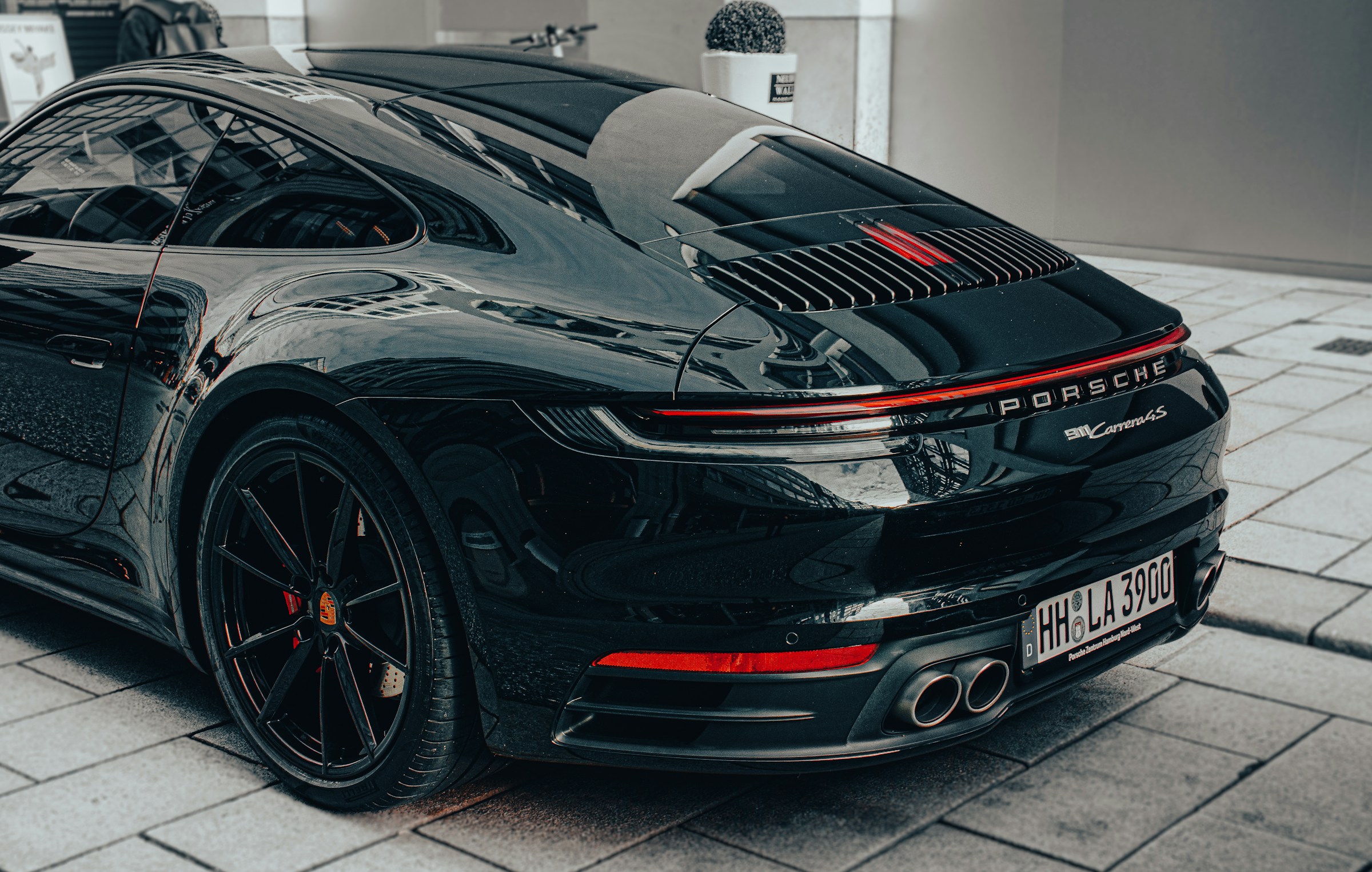
Sixty years of rear-engine logic distilled into the current base 911 — where the Carrera badge came from and what the 992 does with it.
The Porsche 911 has been in continuous production since 1964, and it remains among the most recognizable performance cars ever made.[1] Sketched by Ferdinand “Butzi” Porsche and shown in 1963, it was originally badged 901 — until Peugeot objected to three-digit names with a central zero, and 911 was born.[1] Every generation since has kept the same improbable recipe: a rear-mounted flat-six and a 2+2 cabin.[1]
What Carrera means
Carrera is not a trim line invented by marketing. The name was revived from the 356 in honor of Porsche’s victories in the Carrera Panamericana road race, and it denotes the sportier, higher-output core of the range, offered with rear- or all-wheel drive.[1] When you buy a Carrera, you are buying the center of gravity of the whole 911 family.
The 992 in numbers
- Engine: 3.0 L twin-turbocharged flat-six[1]
- Output: 380 hp (992.1); 389 hp (992.2), with 332 lb-ft of torque[1]
- 0–60 mph: 4.2 seconds (992.1 base); 3.9 seconds (992.2 base)[1]
- Top speed: 183 mph[1]
- Transmission: 8-speed PDK dual-clutch automatic[1]
- Body styles: Coupé, Cabriolet, Targa[1]
The weight of lineage
The 992 stands on deep foundations. From 1964 to 1998 the 911 was air-cooled with torsion-bar suspension; water cooling arrived with the 996 in 1998.[1] Along the way the platform became one of motorsport’s most successful, with Le Mans wins and world championships in the late 1970s.[1] It placed fifth in the 1999 Car of the Century poll, and the millionth 911 was built in 2017.[1]
The 992 Carrera is that whole history made usable every day — fast enough to be serious, civil enough to be constant. The full breakdown is on the Porsche 911 Carrera database page, and current cars are in live 911 Carrera inventory.
Sources
- Porsche, 911 official model page, porsche.com. Tier 1
- Car and Driver, Porsche 911 model overview, reviews, and specifications, caranddriver.com/porsche/911.