Documentation, inspection, the test drive, and the costs nobody quotes you. What to work through before committing to a used sports car.
Buying a used sports car is not the same transaction as buying a used commuter. The cars are driven harder, modified more often, and stored for longer stretches. The good ones are documented obsessively and the bad ones are documented not at all — and at this level, that difference is most of the price. This is the checklist we would work through before committing to anything.
Start with the paperwork, not the car
Before you look at paint, look at records. A complete service history is the single most reliable predictor of what the next three years of ownership will cost, and it is the one thing that cannot be reconstructed after the fact. What you want to see:
- Continuous service records with dates, mileages, and the shops that did the work. Gaps are not automatically disqualifying, but they need an explanation.
- A clean title, verified independently rather than taken on the seller’s word. Salvage and branded titles materially affect value and insurability.
- Matching VINs across the title, the registration, and the car itself.
- Recall and warranty status. On newer cars a transferable balance of factory warranty is real money.
- Ownership count and duration. One careful long-term owner usually beats four short ones.
Know the model before you shop it
Generic advice only gets you so far; each car has its own questions. Three examples from our database show how different those questions are.
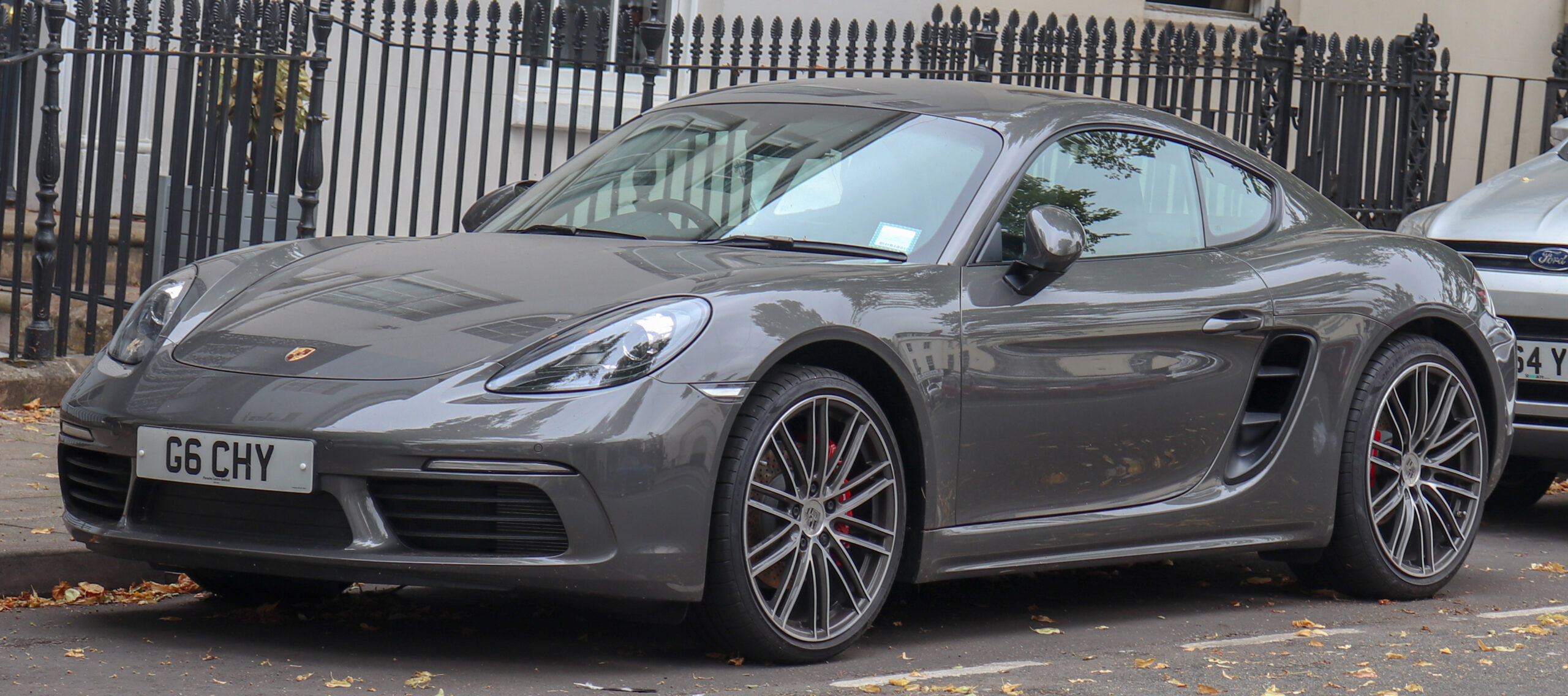
The Porsche 718 Cayman (982) spans an unusually wide range — a 2.0-litre turbo flat-four at 296 hp at the bottom, a 2.5-litre flat-four in S and GTS trim, and a 4.0-litre flat-six in the GTS 4.0, GT4, and GT4 RS, topping out at 493 hp.[1] Transmission choice spans a six-speed manual and a seven-speed PDK. A listing that says “718 Cayman” tells you almost nothing; you need the engine and gearbox before the price means anything. Work from the 718 Cayman record, then filter live listings.
The BMW M4 (G82) has a similar spread: a 3.0-litre S58 twin-turbo inline-six producing 473–543 hp, rear-wheel drive or xDrive all-wheel drive, manual or automatic.[2] The Competition xDrive reaches 60 mph in 2.8 seconds. Drivetrain layout changes both the character and the insurance quote. Check the M4 record and current M4 inventory.
The Chevrolet Corvette (C8) covers the widest gulf of all — from a Stingray at 490–495 hp to a ZR1 at 1,064 hp, with an E-Ray hybrid and a flat-plane-crank Z06 in between.[3] The 2021 base Stingray launched at $60,995. These are not variations on a theme; they are different cars wearing one badge. Start at the C8 database page before you browse Corvette listings.

The pre-purchase inspection is not optional
Have the car inspected by a specialist in that marque, not a general mechanic, and not the seller’s shop. Budget a few hundred dollars. It is the cheapest insurance in the entire process, and on a car where a single deferred service item can run into four figures, it pays for itself the first time it finds anything.
A proper inspection should include a compression or leak-down test where appropriate, a scan for stored fault codes, an undertray-off look at the suspension and exhaust, and a paint-depth reading across every panel to reveal accident repair the history report missed. Ask for photographs, not just a verdict.
The test drive
Drive it long enough to reach full operating temperature — fifteen minutes minimum, and longer if you can. Most of what you are listening for does not appear cold.
- Cold start. Insist on starting the car cold yourself. A pre-warmed engine in the driveway is a red flag on its own.
- Brakes. Pulsing under firm braking usually means warped rotors; on carbon-ceramic setups, replacement is extremely expensive.
- Steering and tracking. Pulling, vibration, or an off-centre wheel points at alignment or accident damage.
- Transmission behaviour. Slipping, harsh engagement, or hesitation under load are all expensive.
- Tyres. Check the date codes as well as the tread. Performance tyres age out before they wear out, and a matched set on a wide-bodied car is a real number.
Price the ownership, not just the car
The purchase price is the smallest decision you will make. Before you commit, get an actual insurance quote for the specific VIN, price a set of tyres, and find out what a major service costs at a specialist near you. Then look at how the model is trending. A Honda S2000 — built 1999–2009, 237–250 hp, six-speed manual only, no automatic ever offered — behaves like an appreciating classic rather than a depreciating used car, and needs to be bought and insured accordingly.[4] See the S2000 record or current S2000 listings.
Production status matters too. The Audi R8 (Type 4S), with its 5.2-litre FSI V10 making 532–620 hp, ended production in 2024.[5] Cars that have gone out of production stop competing with new inventory, which changes both pricing and parts availability. The R8 database page has the detail; R8 listings are here.
Where you buy changes the risk
The same car carries a different risk profile depending on where it is sold. A marque specialist or enthusiast dealer usually prices higher, but the good ones pre-sort their inventory, keep the paperwork, and stake their reputation on the car — the premium often buys real peace of mind. A general used-car lot is a mixed bag: the salesperson rarely knows the model’s specific weak points, so your own homework and inspection carry the whole load. A private sale can be the best value of all, because you are buying directly from the person who knows the car’s history — but only if they can actually produce it.
Auctions, online and in person, are their own discipline. They can surface cars you will not find elsewhere and set honest market prices, but the buyer’s premium is real money, inspection windows are tight or nonexistent, and “sold as seen” means the risk is entirely yours. Unless you know the model cold or can get it independently inspected first, treat auctions as an expert’s tool rather than a shortcut. Wherever you buy, the rule does not change: the car with continuous records and an independent inspection is worth more than the cheaper one without them.
Red flags
- A seller who will not permit an independent inspection. There is no good version of this.
- Missing service history explained as “lost in a move.”
- Fresh undocumented paint on a car described as unmodified.
- Modifications without the original parts, particularly to the engine or suspension.
- A price meaningfully below comparable listings with no stated reason.
- Pressure to move quickly. Any car worth buying is worth waiting a week for.
The verdict
Buy the documentation first and the car second. Between two otherwise identical examples, the one with continuous records, a clean independent inspection, and an owner who can answer specific questions is worth the premium every time — and it is cheaper over three years than the bargain was. Take your time, get the inspection, and walk away from anything that will not survive the scrutiny.
Sources
- Porsche, 718 official model page, porsche.com. Tier 1
- Car and Driver, BMW M4 model overview, reviews, and specifications, caranddriver.com/bmw/m4.
- Chevrolet, Corvette official model lineup, chevrolet.com. Tier 1
- Honda Global Newsroom, “Honda to Discontinue Production of the S2000 Sports Car”, global.honda. Tier 1
- MotorTrend, Audi R8 model hub and reviews, motortrend.com/cars/audi/r8.